
All-Weather Exercise For Dogs: Indoor & Outdoor Ideas
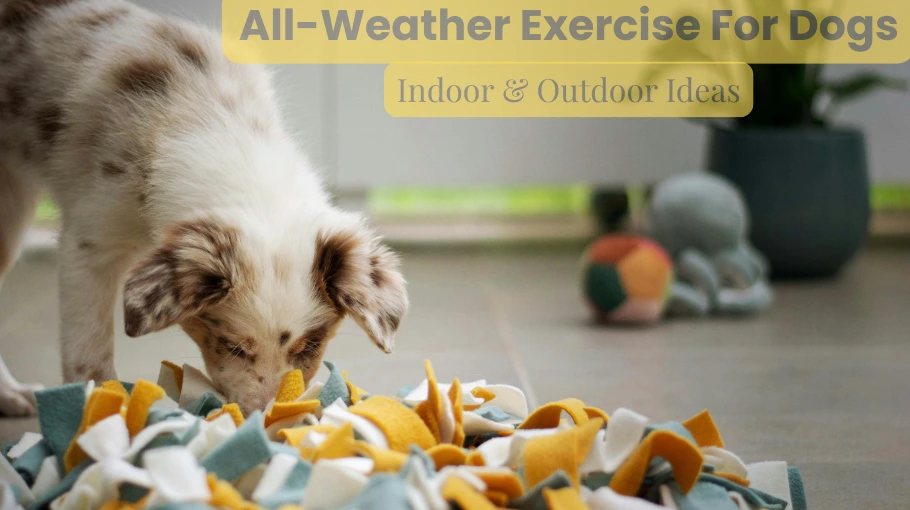
When the weather turns or an injury keeps you from walking as far as usual, indoor exercise for dogs helps keep them sane and prevents boredom from turning into destruction.
Of course, when you can get outside again, there are plenty of outdoor exercises for dogs that’ll have them excited to put their winter coat on.
Discover simple indoor and outdoor exercise ideas for all breeds — including high-energy dogs — to help them stay healthy, happy, and mentally engaged in any weather.
At a Glance
The Importance of Exercise for Dogs (As Stressed by Vets)
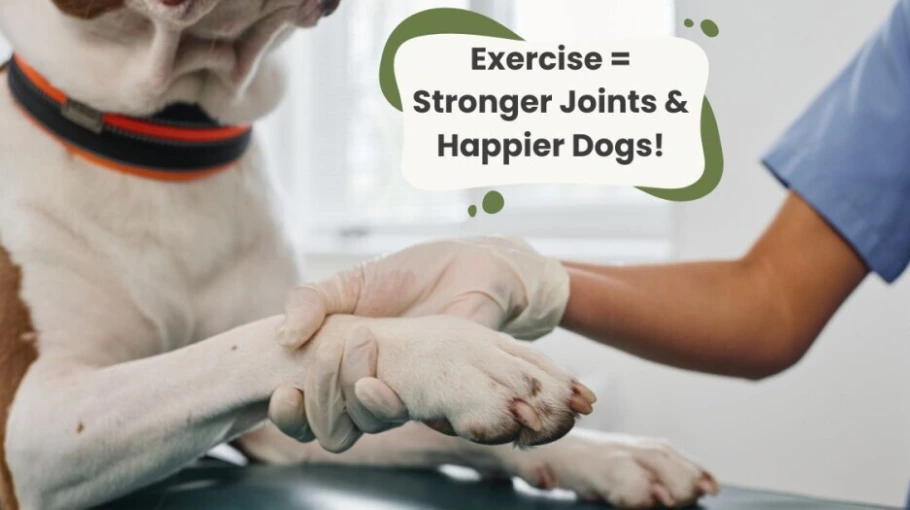
Exercise is crucial for every dog, whether indoors or outdoors. Regular activity maintains a healthy weight, supports joint health, and prevents behavioural issues caused by excess energy. High-energy breeds (like our Staffies) need both physical and mental stimulation to stay calm, content, and well-behaved.
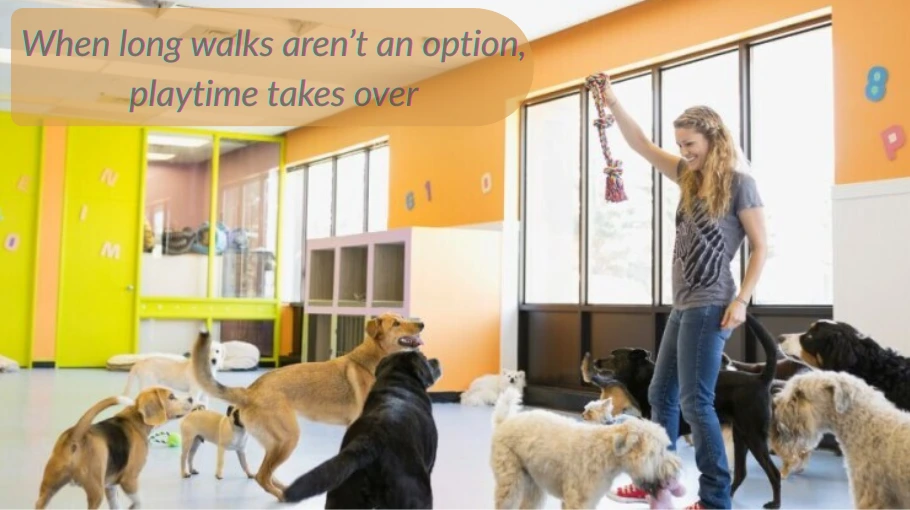
While outdoor activities like walks, runs, and agility courses are ideal, sometimes weather conditions make them impossible. Fortunately, there are plenty of ways to keep your dog active indoors when going outside isn’t an option.
Indoor Exercise for Dogs: Fun Ways to Tire Them Out
1. Staircase Fetch
If you have stairs, they can turn a simple game of fetch into an intense workout:
- Throw a durable ball or fetch toy up the stairs.
- Encourage your dog to chase after it.
- Use this as a training opportunity to teach “drop it.”
This burns energy, strengthens muscles, and taps into their chase instincts. Be cautious though—for dogs with joint issues, limit stair play to prevent strain.
2. Tug of War: A Strength-Building Game
Dogs love tug of war! It builds jaw strength while reinforcing training and boundaries.
- Use a tough toy like the Beaver Tail from EzyDog or a braided denim rope.
- Set clear rules: they must release on command and not move their mouth too close to your hand.
This game reduces unwanted chewing behaviours and improves grip discipline.
A word of caution: If you aren’t confident in your strength to handle the power of your dog pulling a toy away from you, don’t play. My better half doesn’t have the same arm strength I have so she doensn’t play ‘Tug of War’ with either of our two dogs. At times, I struggle. (I see it as a strength training exercise for me).
3. Find the Treat: A Mental Workout
Mental stimulation can be as tiring as physical exercise. Scent work taps into natural instincts and keeps dogs engaged.
We’ve hidden treats under rugs, behind furniture, beside shoes, in corners, and under their bed. Use a command like “find it” to encourage searching.
Switch things around so that it’s not always treats they’re looking for. Just teach them that “find it” means there’s something fun hidden somewhere. They’ll soon learn to go hunt for it.
This keeps their mind busy, helping to burn excess energy without excessive movement.
4. Training and Trick Sessions
Teaching tricks is a great way to challenge and tire out your dog while reinforcing positive behaviour.
- Start with basic commands like “sit,” “stay,” or “paw.”
- Progress to advanced tricks like “spin,” “roll over,” or “up and round.”
- Keep sessions short and reward with high-value treats.
Mental workouts can be more exhausting than physical exercise, making them a perfect indoor alternative.
We taught our two to first go around in a circle using the “round” command, then taught them to stand with the “up” command, and then merged the two so that now they do a pirouette when told “up” and “round”. They’ll do anything for a treat.
The thing to remember with any training is to finish on a positive, which means finish the session with something they are strong at and praise them for following the command.
5. Interactive Puzzle Toys
When you need your dog to entertain themselves, puzzle toys are a great solution.
- Use treat-dispensing toys like the Kong Classic or Kong Rewards Tinker.
- Avoid plastic puzzle toys that break easily under strong jaws.
- Supervise play to prevent the destruction of the toy.
Puzzle toys challenge their problem-solving skills while slowing down eating and keeping them occupied. Treats last longer so it’s cheaper on your wallet.
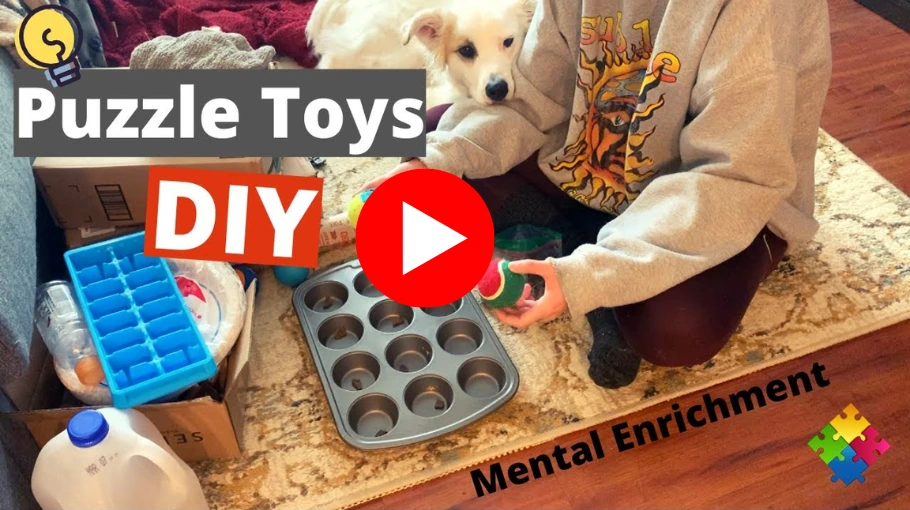
You can buy these, but it’s probably better to use DIY puzzles. Especially for dogs that are prone to destroying toys to get at what’s inside – like squeakers.
This video shows a few DIY games from regular items:
Why Indoor Exercise Matters (Especially for Strong, Muscular Breeds)
Staffies and other high-energy dogs still need daily physical and mental stimulation — even when the weather ruins the plan. Without an outlet, all that energy turns into destructive behaviour, barking, chewing, or general chaos around the house.
If you feel that boredom could be behind destructive behaviour, check out how to stop your dog destroying toys — simple fixes that actually help.
Outdoor Exercise for High-Energy Dogs
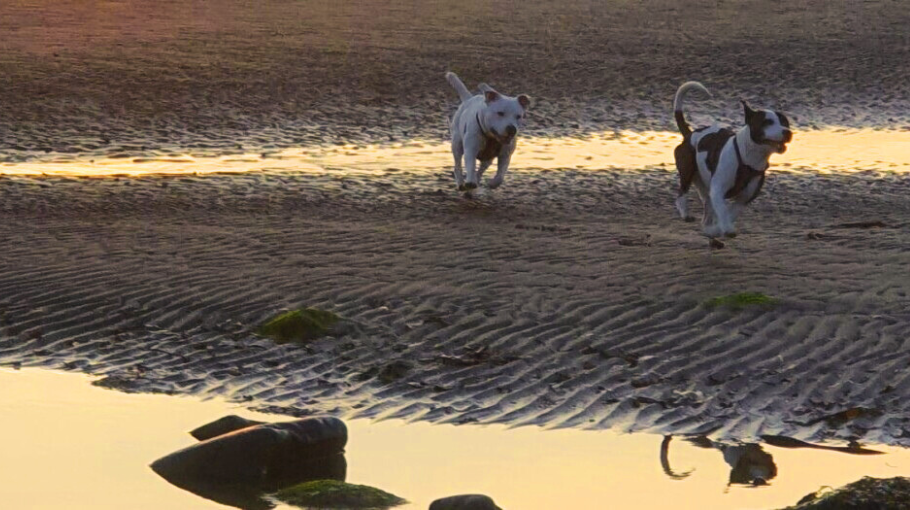
Good weather is the perfect excuse to get outside and boost both you and your dog’s health. Outdoor exercise burns off energy, provides fresh air, and strengthens your bond.
1. Flirt Pole Play
Have you seen these?I first came across it when writing the post about the dog training tools and equipmentwe’ve found helpful. They look ideal for dogs who don’t quite get the hang of fetch. Like, they play for keeps and don’t give you the toy to throw again.
What is a dog s flirt pole? It’s a pole with a bungee cord and a toy attached to the end. Kind of like the feather on a stick for cats, just a lot stronger for dogs.
The game is to move the toy around for the dog to chase it, let it catch it, let it go then start another round of chase the toy. Since the toy is attached to a bungee cord, it’s better for strong dogs because once they catch and tug it, (at speed likely), it’s going to have less of a jerk impact on your shoulders. It’s a fun way to burn off energy while reinforcing impulse control.
2. Off-Leash Running
Off-leash running is excellent exercise for dogs but requires recall training before letting them run loose. Secure fields and enclosed trails are best for safety. Start in a controlled space until you’re confident with the dog’s recall.
Depending on where you live, there may be a dog park or secure field you can hire for off-leash running and training. We used one a few times we found on Facebook. Websites like dogparksnearme.co.uk and runfreedogfields.co.uk have listings for the UK. Sniffspot.com lists dog parks in the US.
3. Structured Walks
Structured walks aren’t just about exercise—they reinforce training in real-world settings. The two tools you’ll need for outdoor training where distractions are everywhere are a slip lead, and for strong dogs, you’d be best equipped with one of the best dog leads for large dogs as they make structured walks much easier.
Instead of letting your dog wander at will, you guide the walk with purpose.
One way to do this is by walking routes where you’ll meet other dogs. With practice, your dog learns to pass calmly or sit on command. Some fellow dog owners may even help, rewarding good behaviour with treats when your dog follows instructions. Regular walks on popular routes build confidence, reduce reactivity, and teach your dog to trust your lead.
In the countryside, structured walks help with safety too. Even if a gate is open, your dog should wait for permission before passing through—especially when livestock could be in fields. Teaching a solid “wait” at gates prevents mishaps (potentially deadly ones at that) keeping both dogs and farm animals safe.
Steep downhill walks also need structure. Pulling on a slope is a recipe for disaster, so this is where some of the most essential commands for dogs like the “on” command (walking close) and “easy” (slowing down) come in. Even if you allow some pulling at other times, a controlled pace downhill is a must.
Some walking routes can be dangerous if you have a strong dog that lunges. For those, you may find it helpful to know what the best head halters are for dogs that pull.
Structured walks keep training consistent, reinforce good habits, and make every walk more enjoyable for both of you.
If your routine sometimes pushes structured walks into dark mornings or evenings, a few visibility and safety tweaks can make a big difference. This post about night-time walking safety covers what helps.
Safety Tips for Exercising Your Dog
- Know their limits: Different breeds have varying stamina levels.
- Watch for fatigue: Heavy panting, slowing down, or loss of focus means it’s time for a break.
- Hydrate: Keep fresh water available at all times, especially during intense outdoor activities.
- Know the forecast: The hottest part of the day is 11 am to 3 pm. Dogs can overheat easily. Don’t go on a long hike when there’s a likelihood it could be too hot for the dog.
Final Thoughts
Keeping your dog active in all weather is possible with a mix of indoor and outdoor activities. Whether your dog is a high-energy breed or just needs a little movement on rainy days, these activities will keep them happy, engaged, and healthy year-round!
I really appreciate these exercises, especially the indoor ideas like ‘Find the Treat’ and ‘Staircase Fetch’. Your outdoor ideas are a break from the norm with things like parkour. I found the safety tips on heat and breed-specific limits a good reminder.
I’d love to see more DIY puzzle toy ideas and game variations for different dog sizes and ages. Also, how do these exercises affect older dogs with mobility issues?
Thanks Phillip. Appreciated. I’ve added a video by Sarah Walsh (she’s a certified dog trainer) that shows different DIY puzzle ideas made from regular stuff.
For older dogs with mobility issues, adapt the routines like slower walks, and swap staircase fetch for regular fetch. They can likely still play tug, and for walking, there’s several dog walking aids that can help keep them mobile for longer. Our old boy had a doggie wheelchair to help him get about, although he never really took to it.
How old’s your dog, and what’s causing the mobility issues? I’d ask your vet at the next check-up appointment.