
Dog Paw Protectors Explained: What to Use (If Any) — and Why
Dog paw protectors sound straightforward until you realise they can mean very different things.
Boots, socks, waterproof covers, balms — each solves a different problem. And in many cases, protection isn’t about adding more gear, but understanding when it’s actually needed.
If you’re dealing with cold pavements, salt, sore pads, or slipping indoors, the right option depends on the situation. And sometimes the right choice is to use nothing at all.
What to Know Dog Paw Protection
When Dogs Do — And Don’t — Need Paw Protection
In many cases, prevention works better than protection. Changing walk times, choosing grass over gritted paths, or avoiding extreme surfaces can remove the need for extra gear altogether.
When paws are healthy, simple habits like rinsing or wiping after walks are usually enough. Protection becomes relevant when irritation is present, conditions can’t be avoided, or further damage needs to be prevented.
Here’s when it typically makes sense.
Cold or Frozen Ground
Frost, snow, and ice draw heat away from the paws quickly, especially in short-haired breeds. Dogs may tense up, rush the walk, or pull more — often before obvious pain shows.
In sustained cold, protection reduces direct contact and makes winter walks more manageable.
Salted Pavements or Grit
Road salt and grit can dry pads, irritate small cracks, and sting damaged skin. On heavily treated routes, a protective paw balm can help limit contact and reduce residue that may be licked off after the walk.
Hot Surfaces (Short Exposure)
Tarmac, concrete, and sand heat up fast, even when the air feels mild. Brief exposure may justify temporary protection, but avoiding hot ground altogether is usually safer.
Injured, Sore, or Healing Paws
When a paw is compromised, protection isn’t about extending walks. It’s about preventing contamination, limiting licking, and keeping dressings dry during short, necessary trips outside.
Slipping Indoors (Hard Floors)
Healthy pads usually provide enough grip on smooth floors. If slipping becomes noticeable — especially in older dogs — it’s often reduced stability rather than the surface itself.
Light protectors can improve traction indoors, but they should be viewed as support, not a cure.
Most routine walks don’t require paw protection. It’s specific conditions — not everyday exercise — that make it useful.
Types of Dog Paw Protectors (Explained Simply)
There are several types of dog paw protectors, each designed for different conditions. Some are meant for indoor grip or recovery, while others are built for wet ground or winter walks.
Socks & Fabric Paw Covers
Socks and fabric covers are the lightest form of paw protection. They’re mainly used indoors or during recovery, not for outdoor walking.
They help prevent licking during recovery, improve grip on smooth floors, and protect balms or dressings while a dog rests or moves around the house.
Fit matters more than material. Elastic-only designs come off easily. Velcro holds better but can clog with hair. Most aren’t waterproof and aren’t suited to wet or rough ground.
Waterproof Covers (Rubber or Balloon-Style)
Rubber covers act as a waterproof barrier rather than a walking shoe. They’re best for short trips onto wet grass or salted ground, especially when keeping dressings dry during short outdoor trips matters.
Because they’re thin and flexible, correct sizing is essential. They can twist, slip, or tear on sharp surfaces.
They keep moisture out, but offer little traction or insulation. Think temporary protection, not everyday footwear.
Lightweight Waterproof Shoes
These sit between rubber covers and full winter boots. They handle wet or muddy ground without the bulk of heavy-duty footwear.
They’re suitable for short, controlled outings where dryness matters more than warmth or durability.
Breathability is limited, and fastening systems are usually lighter. They’re not built for long walks, hiking, or harsh terrain. Compared to rubber covers, they offer more structure and stability — but they don’t seal as tightly.
Winter Boots (Insulated & Grippy)
Winter boots provide the most protection. They’re designed for icy, abrasive, or heavily salted surfaces where traction and insulation matter.
They use thicker soles and stronger fastening systems to stay in place during cold-weather walks. Dogs may need time to adjust to the added structure.
In mild conditions, they’re often unnecessary. For sustained cold or abrasive surfaces, cold-weather walks on icy or salted ground may require more structured protection.
Paw Waxes & Balms (Non-Boot Protection)
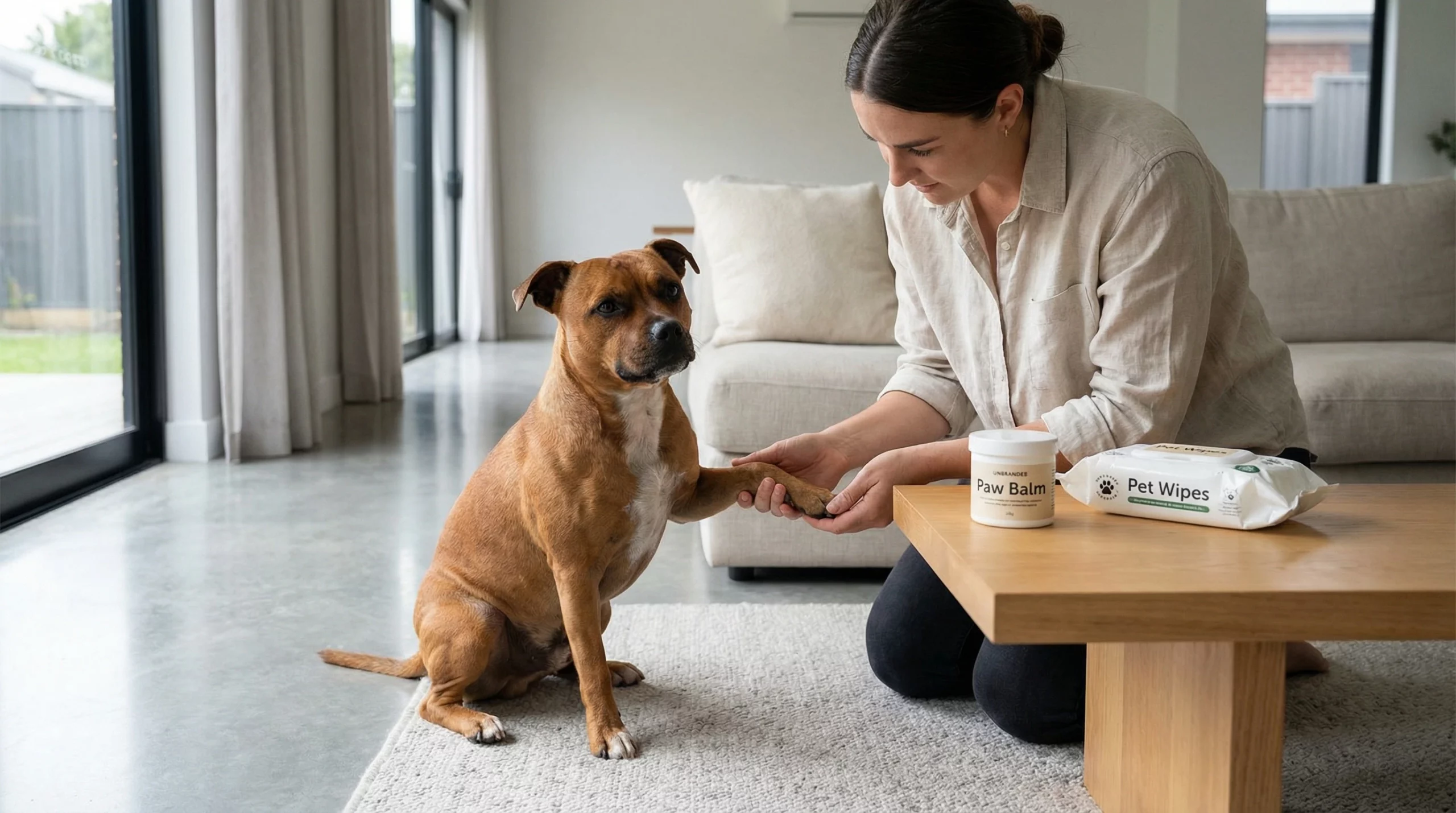
Balms protect the pad surface rather than covering it. They’re best suited to mild conditions or as part of a layered approach.
Barrier balms reduce contact with salt, grit, and cold ground during winter walks. They’re not waterproof and need reapplying.
Recovery balms soothe dry or irritated pads after exposure but don’t prevent further damage if conditions remain harsh.
Balms should be dog-safe and don’t replace routine paw checks. If a paw is cut, bleeding, or your dog is persistently limping, it’s best to ask your vet rather than relying on topical products alone.
Why Paw Protection Sometimes Causes Problems
Even when you choose the right type of paw protection, issues can still arise. Most problems come down to fit, duration, or expectations — not the idea of protection itself.
Poor Fit and Rubbing
Boots that twist, socks that bunch, or incorrect sizing can create pressure points and friction. Rubbing around the dewclaw is common, especially during longer walks.
Temporary fixes may reduce friction, but they don’t correct poor fit. If something shifts or irritates early on, it rarely improves with more movement.
Overuse and Unrealistic Expectations
Paw protection is designed for specific conditions — not to make harsh environments comfortable for extended walks.
If your dog is showing discomfort in cold, heat, or rough terrain, adding boots doesn’t automatically make the walk suitable. In many cases, shortening the outing or avoiding the surface altogether is the better option.
Reduced ground feel can also affect balance. What looks like a dog “hating boots” is often a response to unnecessary gear or wearing them longer than needed.
Protection works best for routine exposure — not for pushing through conditions your dog would otherwise avoid.
When Rest Is the Better Choice
If a paw is injured or healing, continuing to walk — even with protection — can slow recovery. Dogs will often push through discomfort, especially in stimulating environments.
In those cases, reducing activity matters more than adding equipment. Sometimes the right choice isn’t a different product — it’s time and rest.
How to Decide What’s Right
Before reaching for paw protection, start with the conditions — not the product.
- How harsh is the surface?
Cold, heat, grit, or sharp ground matter more than the weather itself. Mild or familiar surfaces usually need nothing. Abrasive or extreme ones may.
- How long is the exposure?
A quick trip outside isn’t the same as a full walk. Short exposure may justify temporary protection. Longer exposure demands more caution — or a change of plan.
- Are the paws already compromised?
Licking, soreness, or healing shifts the goal. It becomes less about distance and more about preventing contamination and further irritation.
- Can it be avoided instead?
Changing the route, timing, or surface often removes the issue entirely. Avoidance is usually the simplest solution.
If you’re unsure, pack protection rather than defaulting to wearing it.
Introduce new gear gradually. Test fit and comfort indoors first. The best choice is usually the least intervention that keeps paws comfortable and safe.
Quick Recap
Dog paw protectors aren’t always necessary. In many cases, changing the route, timing, or surface solves the problem without extra gear.
When protection is needed, match it to the situation:
- Socks for indoor grip or recovery
- Waterproof covers for short, wet exposure
- Winter boots for sustained cold or abrasive ground
- Balms for surface protection and mild conditions
Use paw protection purposefully — not automatically. Often, the best decision is choosing the least intervention that keeps paws comfortable and safe.