
Best Dog Training Treats (Based on How You Actually Train)
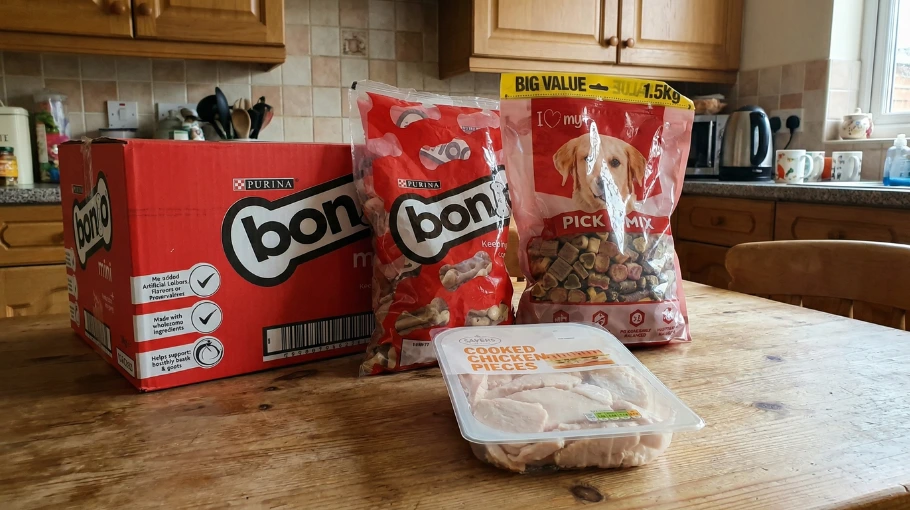
Dog training treats aren’t one-size-fits-all. What works in a quiet kitchen doesn’t always land in a busy training class, and the treat that gets instant focus in one setting can fall flat in another.
Most training frustration comes from using the right reward at the wrong time. Anyone who’s watched their dog turn their nose up at a treat in a distracting environment knows how quickly confidence — and focus — can disappear.
The goal isn’t novelty; it’s consistency. Cost, calories, and context all matter if training is going to stick, and choosing treats based on the situation makes a bigger difference than chasing whatever’s labelled “best.”
The 3 Best Dog Training Treats for Different Training Scenarios
Best for: Weekly Group Training Classes & High-Distraction Sessions
Morrisons Cooked Chicken Pieces (210g)

- ✅ Group classes & busy settings — outperforms dried treats when focus drops
- ✅ Clean reinforcement timing — soft, familiar reward keeps response sharp
- ✅ Strategic high-value use — effective in tiny amounts for difficult focus work
🟢 Best for:
Group training classes and other high-distraction environments where focus is more important than calories, and rewards need to be delivered quickly.
⭐ Why it’s the best:
Chicken is widely recognised as a high-value training reward for dogs. Its natural smell, soft texture, and familiarity make it far more motivating than most dried or heavily processed training treats — especially in environments where multiple distractions are competing for attention.
In group classes, outdoor sessions, or high-arousal situations, reward value is critical. Highly scented, soft foods like chicken cut through background noise more effectively and allow for faster reward delivery, which keeps timing clean and reinforcement clear. This is why chicken often becomes a staple for trainers during structured sessions where maintaining focus is difficult.
Because it’s so motivating, only very small amounts are needed. That makes chicken particularly effective for situational training — moments where you need engagement now, not gradual interest over time. It’s not intended as an everyday reward, but as a high-value tool for challenging focus work around distractions.
📌 The cliff notes:
- Widely recognised high-value training reward
- Strong natural scent overpowers dried treats
- Soft texture supports fast reward timing
- Ideal for high-distraction or high-arousal sessions
- Best used strategically, not routinely
⚠️ Cons:
- Easy to overuse if portion size isn’t controlled
- Not suitable as a daily training treat
- Chunk size varies and needs preparation
- Short shelf life means it requires planning
💬 My take:
When we first started attending group training classes with our two, we did what most people do and turned up with bags of pre-packaged “training treats,” assuming they’d be enough. They weren’t.
In a busy class setting, those dried treats quickly lost their impact. Chicken didn’t. In fact, the trainer already had chicken on hand to help dogs refocus mid-session, which made it obvious why our treats were being ignored.
On weeks when we had time, we’d boil chicken breasts ourselves, cut them into bite-sized pieces, and freeze portions to defrost overnight before class. On busier weeks, these packets became the practical alternative. They’re grab-and-go, easy to add to a regular food shop, and don’t require specialist sourcing.
I still treat chicken as a once-weekly tool, not a staple. Cut into pea-sized pieces, a surprisingly small amount lasts an entire class. Used deliberately, it keeps its impact without creeping into everyday calorie territory.
Best for: Daily Training Sessions at Home (5–10 Minutes)
Bonio Mini Adult Dog Biscuits Original (10kg Bulk Box)

- ✅ Daily training at home — ideal for short, frequent sessions where consistency matters
- ✅ Low cost per reward — bulk box allows regular reinforcement without rationing
- ✅ Mini, breakable size — easy to snap for multi-dog or low-calorie training
🟢 Best for:
Short, frequent training sessions at home where consistency is more valuable than excitement.
⭐ Why it’s the best:
Daily training only works if it’s affordable, repeatable, and sustainable. That means using a reward you can give often without worrying about cost, calories, or running out.
Mini Bonios are designed for exactly that role. They’re small, dry, easy to handle, and inexpensive in bulk, which makes them practical for everyday reinforcement. Because they’re already smaller than standard Bonios — and can be snapped again — you can deliver frequent rewards without escalating treat value or overfeeding.
They’re not marketed as “high-value” treats, and that’s actually an advantage here. For calm behaviours, routine cues, and short daily sessions, a predictable, low-arousal reward helps keep training steady rather than turning every interaction into a hype event.
📌 The cliff notes:
- Very low cost per reward (especially in bulk)
- Mini size suits frequent reinforcement
- Easy to snap into even smaller pieces
- Practical for multi-dog households
⚠️ Cons:
- Not high-value enough for heavy distractions on their own
- Bulk boxes aren’t usually stocked in supermarkets
- Biscuit quality can vary (some arrive broken)
💬 My take:
This is the kind of treat that makes daily training realistic, rather than something you subconsciously limit because you’re worried about calories or cost.
One moment that stuck with me: we were out with their breeder and their two Staffies (the mother and sister to our two) — four Staffies off lead, highly excited, with commands bouncing straight off them. You know what did land? Me shouting “Bonio!” Our two came running back immediately.
There’s an important distinction worth knowing. The standard Bonio Originals in the 650g boxes are far too large for regular training use. The Mini Bonios, which we didn’t even realise existed at first because they’re not commonly stocked in supermarkets, are a completely different proposition. They’re much better suited to everyday training without quietly overloading a dog’s diet.
Despite being “mini,” they’re still big enough to snap in half. One biscuit, split into two, comfortably rewards both of our dogs during quick sessions around the house. And if a box arrives with broken biscuits? I don’t mind — I’m breaking them anyway. Two small pieces instead of one half does the same job.
Our box also came with multiple small plastic bags inside — the sort you’d expect from a market stall. I don’t know if that’s standard or intended for resale, but they’ve been genuinely handy. I’ll decant a small amount into one of those bags and drop it into my walking bag, which keeps crumbs contained and stops everything else ending up coated in biscuit dust.
That’s not something I’d ever buy a product for, but as a practical bonus, it’s been surprisingly useful.
Best for: Irregular Rewards When the Situation Demands It
I Love My Dog Pick ‘N’ Mix Dog Chews (1.5kg)

- ✅ Calm indoor reinforcement — useful for settle work, door manners, and low-arousal behaviours
- ✅ Middle-ground reward — more engaging than biscuits without the intensity of fresh food
- ✅ Slower chew, mixed textures — keeps interest without encouraging frantic responses
🟢 Best for:
Indoor training, calm behaviour reinforcement, and controlled reward moments around the house or garden.
⭐ Why it’s the best:
These chews sit between dry biscuits and fresh food. They’re more engaging than everyday biscuits, but far less intense than high-value rewards like chicken, which makes them well suited to low-arousal, deliberate behaviours.
The mixed shapes and textures help maintain interest without encouraging frantic behaviour, and their firmer chew means dogs engage with them more slowly. That makes them particularly effective for calm reinforcement — things like settle work, door manners, or holding position — where you want engagement without excitement.
Because they’re designed to be chewed rather than swallowed quickly, they’re best used in controlled environments, not fast-paced training or high-distraction settings.
📌 The cliff notes:
- More engaging than biscuits, less intense than fresh food
- Mixed textures help maintain interest
- Slower chew suits calm behaviours
- Useful for indoor training and garden work
- Can double as simple enrichment
⚠️ Cons:
- Not pocket-safe due to moisture content
- Must be resealed properly or they harden
- Absorb moisture easily if carried loose
- Not suitable for fast reward delivery
💬 My take:
I only use these in the house or garden. They’re useful for things like sit-stays when guests arrive, calm behaviour around deliveries, or reinforcing settled behaviour indoors.
I’ve also scattered a small handful on the grass for simple sniffing games, which slows the dogs down and keeps engagement low-key rather than frantic.
Storage is important with these. If they’re left open, they go brick-hard. If they’re carried loose, they absorb moisture and soften. I’ll occasionally decant a small amount into a bag for a specific purpose, but they’re not something I rely on for walks or training sessions where timing needs to be sharp.
They’re a situational tool, not a default reward — and they work best when used that way.
One thing that’s genuinely useful about the mixed bag is the variety of shapes. Some of the chews are stick-style, including longer versions of the smaller treat-sized pieces. I’ll often cut those down to use as controlled rewards rather than giving them whole.
There are also a few stick-shaped chews that are similar in form to dental sticks, designed to get between the teeth. I tend to keep those intact and use them occasionally in place of a dental-style chew, rather than as a training reward.
If the mixed bags are hard to find, I’ve also bought the stick-only versions and cut them down myself. Used that way, they fill the same role — irregular rewards that are more engaging than a biscuit, without tipping into high-value territory.
(For comparison: I usually pay around £2.99 in-store. Online prices vary with availability and delivery.)
How to Use Dog Training Treats Effectively
The type of treat you use is less important than how and when you use it. Training works best when rewards are chosen intentionally, not out of habit or novelty. This section pulls together the principles behind the product choices above, so you can apply them regardless of brand.
Nutrition & Calories Still Matter
Training treats add up quickly, especially during short, frequent sessions. Even small rewards can push daily calorie intake higher than intended if they’re used without thought.
Smaller pieces allow for more repetitions without overfeeding. High-value treats don’t need to be large to be effective — in most cases, smell, texture, and timing are far more impactful than portion size.
Cost Per Reward (Not Cost Per Bag)
The real cost of a training treat isn’t the price on the bag — it’s the cost per reward. Treats that can be broken into multiple pieces often stretch much further than they appear.
Affordable treats make consistency easier. When rewards are cheap and plentiful, there’s less temptation to ration training or skip sessions altogether.
Bulk Buying vs Convenience
Bulk treats work best for daily habits where repetition is more valuable than excitement. They remove friction and make short, regular training sessions easy to maintain.
Fresh or higher-value food works better for short, specific situations where focus is difficult to hold. Convenience still plays a role — a reward you actually use is better than one that stays in the cupboard.
Availability & Consistency
Consistency is more valuable than variety. Using the same rewards regularly helps dogs focus on the behaviour rather than the novelty of the treat.
Constantly switching treats can increase arousal and reduce clarity. Familiar rewards keep training predictable and easier to repeat across different environments.
Why Changing Treats Too Often Can Make Training Harder
Novelty can feel useful, but it often creates excitement rather than precision. Over-stimulated dogs are more likely to rush behaviours or disengage once the reward disappears.
Calm, repeatable rewards support reliability. When the reward stays predictable, the behaviour becomes the focus — not what’s coming out of your pocket next.
Final Thoughts
The best training treat isn’t about finding a single winner — it’s about matching the reward to the moment.
For high-distraction situations like group classes or busy environments, fresh chicken works because it cuts through noise and competing stimuli when focus really needs to be maintained. It’s a situational tool, not something to rely on every day.
For short, frequent training sessions at home, Mini Bonios make consistency realistic. They’re predictable, low-key, and affordable enough to support calm, repeatable behaviour without turning training into a calorie or cost concern.
And for controlled, low-arousal reinforcement indoors or in the garden, Pick ‘N’ Mix chews sit neatly between — more engaging than a biscuit, but slower and calmer than high-value food.
Used this way, treats support learning without taking over the process. Frequency, cost, and context are far more important than brand names, and responsible use will always beat constant escalation.
- Best for group classes & high-distraction sessions: Morrisons Cooked Chicken Pieces (210g)
- Best for daily training at home: Bonio Mini Adult Dog Biscuits Original (10kg Bulk Box)
- Best for calm, controlled reinforcement: I Love My Dog Pick ’N’ Mix Dog Chews (1.5kg)
FAQs
What do professional dog trainers use for treats?
Professional dog trainers typically use simple, high-value foods when focus is difficult, such as chicken, cheese, or similar soft, strongly scented rewards. For everyday training, many rely on low-value, repeatable treats that allow frequent reinforcement without overfeeding. The key is matching reward value to the environment, not using the same treat for every situation.
What is the best treat to give a dog when training?
The best training treat depends on the situation, not the brand. High-distraction environments require high-value, soft, scented rewards to hold attention. Daily training works best with low-key, affordable treats that support repetition and consistency. Using the appropriate level of reward prevents over-excitement and makes training easier to maintain long term.
What can I use as a training treat for my dog?
Training treats can include commercial biscuits, fresh food, or cut-down chews, depending on context. Soft foods work best for fast reward delivery, while dry treats suit calm, repeatable behaviours. Portion size is more impactful than the treat itself — smaller pieces allow more repetitions without excessive calories or reliance on constant escalation.
Should you give dogs treats when training?
Yes, treats are an effective training tool when used intentionally. Rewards reinforce behaviour, improve timing, and help dogs understand expectations. Treats should support learning, not replace it. Overuse or constant escalation can reduce reliability, while calm, consistent rewards help build clear, repeatable behaviour over time.