
How To Choose A Dog Pooper Scooper
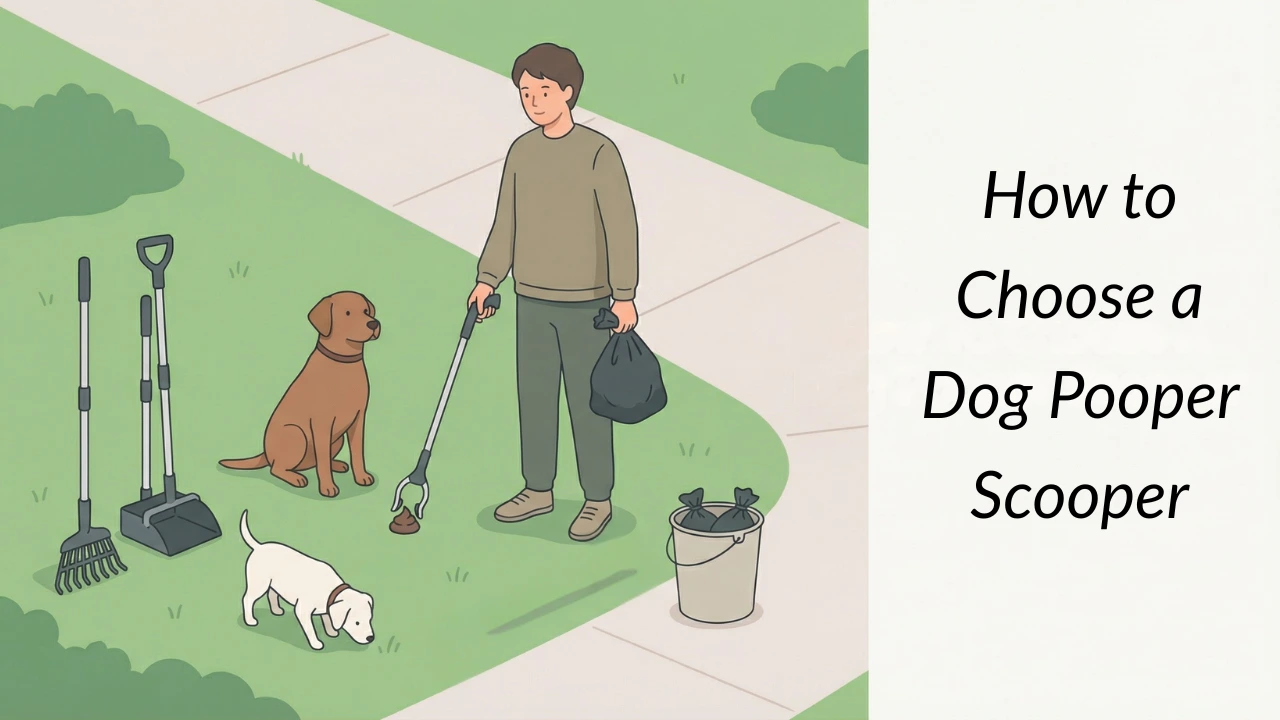
Most dog pooper scoopers seem fine at first. Until you use one on the wrong surface. That’s when problems start.
Some designs work well on grass but struggle on gravel. Others suit walks but feel awkward in the garden. The right choice depends less on brand and more on how you use it.
The best type depends on how often you clean, how many dogs you have, and how much bending you’re comfortable with. Below is a breakdown of the main types, materials, and trade-offs to help you choose what fits.
Finding the Best Dog Pooper Scooper Tool
Types of Dog Pooper Scoopers
There are a few main dog pooper scooper designs. Each works best in specific conditions.
Rake and Shovel Sets
Rake and shovel systems are common for backyard use. They let you sweep waste into a pan without bending too much. They work best on grass but can struggle on gravel or hard ground.
These are better suited to bulk cleanups than quick grab-and-go use.
Grabber-Style Scoopers
Grabber-style scoopers are built for one-hand use. They’re useful on walks when you’re holding a lead at the same time.
They’re compact and easy to carry, but usually hold less. That means more frequent emptying if you’re dealing with multiple dogs.
Bin-Style Scoopers
Bin-style scoopers are designed to hold more waste at once. They suit households with larger yards or more than one dog.
They’re bulkier than other options, so they’re less practical for walks.
Jaw Bucket Scoopers (Smooth)
Smooth jaw designs work well with bags. They allow for cleaner pickup and suit paved areas or short grass.
They’re often chosen by owners who want to keep contact minimal and disposal simple.
Jaw Bucket Scoopers (Toothed)
Toothed versions dig into loose or muddy ground more easily. They handle uneven terrain better than smooth jaws.
They’re less suited to bag-lined setups and can be harder to clean.
Materials and Durability
The material affects weight, lifespan, and how well the tool handles weather.
Plastic Scoopers
Plastic models are usually lighter and easier to clean. ABS plastic is stronger than standard plastic and holds up better under pressure.
Lower-grade plastic can crack or weaken over time, especially with frequent use.
Metal Scoopers
Metal options, including aluminium, offer more strength. They handle heavier loads but add weight.
In colder weather, metal can bend if forced against frozen ground. Ongoing exposure to moisture can also lead to rust if the material isn’t treated.
Think about where the tool will be stored. Damp conditions shorten lifespan if the material isn’t suited to it.
Everyday Trade-Offs
Every design comes with compromise.
Size vs Ease of Handling
Large-capacity scoopers reduce trips to the bin. They’re useful for multi-dog homes or less frequent cleanups.
But added size means added weight. For some owners, that makes daily use less comfortable.
Simple Tools vs Multi-Use Designs
Some tools offer added features, but simplicity often works best. A scooper designed to do one job well is usually less frustrating than one trying to cover every scenario.
The least frustrating option is the one that matches how you’ll actually use it.
Two Common Mistakes That Cause Frustration
Most issues come from using the wrong tool in the wrong conditions.
Using the Wrong Tool on Frozen Ground
A toothed grabber isn’t built to scrape frozen waste from hard ground. Forcing it can snap individual teeth, which quickly makes it difficult to use.
Forcing Tools Beyond Their Limits
Even the best dog pooper scoopers can fail when pushed too far. A metal rake used with force on frozen ground can bend. The issue isn’t always the build quality — it’s using it outside its intended purpose.
Choosing the right type for your conditions prevents most problems.
To Recap
Choosing the right scooper comes down to where you use it, how often you clean, and how much strain you want to avoid. There isn’t a single design that works best for every garden or routine.
Match the tool to your ground type and clean-up habits, and most frustration disappears.