
How to Teach Your Dog to Focus: Improve Your Dog’s Attention During Training
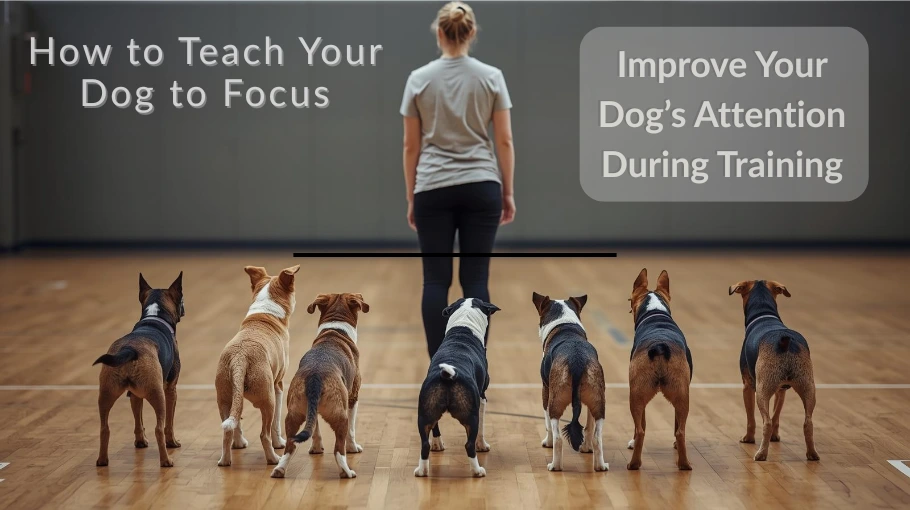
There were twelve dogs in the training hall that night. Twelve dogs, twelve owners, and the lead trainer suddenly looked at me and said, “Let’s try him off-lead.”
My stomach dropped.
We’d spent months building the foundations — sit and wait, steady lead-walks past other dogs, recall from as far as the training lead would allow. Slow, repetitive work that isn’t glamorous, but it’s exactly what teaches a dog how to focus.
Those early lessons set up a communication system you end up relying on every single day.
Still… unclipping the lead in a room full of excitable dogs? Nerve-racking.
The lead came off.
He paused for a heartbeat… then, as expected, he was off — weaving, snuffling, taking it all in. The trainer nodded and said, “Now we teach him to focus on you.”
And she was right.
Focus is your dog learning to choose you even when something else is more exciting.
How to Teach Your Dog to Focus During Walks & Training Sessions
Why Dogs Lose Focus (And Why It’s Normal)
Most people see a dog who listens beautifully at home but falls apart outside and assume something’s wrong. In reality, nothing is wrong — it’s completely normal.
Home and outside are two entirely different skill levels. Indoors, you’re the most interesting thing in the room. Outdoors, you’re competing with:
- movement
- scent
- people
- dogs
- wildlife
- sounds
- weather
- the sheer novelty of being outside
And with high-energy dogs like Staffies, they don’t just notice things — they experience them. Someone smiles at them and they instantly want to greet, jump, lick, and be involved.
Dogs also don’t generalise well. A behaviour learned in your kitchen doesn’t automatically transfer to:
- the garden
- a quiet path
- a busier park
- a class full of dogs
- a field full of scents
Every new place is a brand-new difficulty level.
Most focus failures come from one of two places:
Overstimulation
Too much happening → brain overloaded → attention scatters.
Boredom
Too easy, too predictable → mind wanders → attention drops.
Focus training sits right in the middle: interesting enough to hold their mind, calm enough for them to learn.
The Foundation Attention Work to Do at Home
Before you can expect your dog to focus around distractions, they need to understand the basic language of attention — and the easiest place to teach that is at home.
At this stage, you’re showing your dog:
- how to tune in
- how to understand “yes”
- how to offer voluntary attention
- how to look to you before acting
It’s simple, repetitive work, but it pays off massively outdoors.
The Marker That Tells Your Dog ‘That Was It’
Some people use clickers, some use a verbal cue, some use sounds. The tool doesn’t matter — clarity does.
A clean, sharp marker like “yes” or “attaboy” works well because it’s:
- short
- easy to say (or easy to click)
- fast
- consistent
Once your dog understands what marks the exact behaviour you want, communication becomes calmer and clearer. They know what earned the reward.
Rewarding the Glance (Not the Stare)
When people think of “focus,” they often imagine their dog holding a long, deliberate stare. But that’s advanced. The glance comes first.
The glance is when:
- your dog looks at something
- their eyes flick to you for a millisecond
- then back again
That flicker of attention is your moment.
It’s your dog saying, “I’ve seen something — what do you want me to do?”
Reward that moment and your dog learns that checking in with you pays. Outdoors, that micro-glance often happens right before a dog decides to chase, pull, or react. Reward it early and you’ll see it more.
This is where reliability takes shape.
Check-Ins
A check-in is simply your dog glancing at you before acting.
If you need ideas for keeping your dog mentally engaged on days when walks are limited, here are some indoor and outdoor exercise ideas.
Indoors, it starts as a tiny look. Outdoors, it becomes the habit that keeps dogs steady around:
- other dogs
- runners
- wildlife
- cyclists
- sudden movement
Name once.
Reward the glance.
Carry on.
Little by little, your dog learns:
“When something interests me, I check with you first.”
That habit becomes your safety net.
Progression: Home → Controlled Spaces → Real World
Most dogs struggle because owners jump straight from “living room success” to “full-blown freedom” too soon. It’s the quickest way for a dog to look “disobedient” outdoors when really they’re just overwhelmed.
The middle step is crucial.
1. Home
Low distraction, easy wins, perfect for foundation work.
2. Controlled Spaces
Places like:
- the back garden
- the front garden
- a driveway
- a small enclosed area
- anywhere with mild, predictable activity
These give you small doses of the outside world without overwhelming your dog. Every mild distraction becomes useful training.
For us, the progression was: indoors → quiet back garden → front garden with a low fence and more to see → short quiet trails.
3. Exploring the Big World
Once your dog can check in reliably in controlled spaces, moving to:
- quieter paths
- busier areas
- open parks
- fields and trails
…feels natural. You’re not throwing them in the deep end — you’re increasing difficulty gradually.
We’re fortunate to have plenty of trails nearby. Early on, fenced fields with sheep were ideal — real distractions, but controlled.
A long line can be useful for building focus in open spaces where you want a safety buffer. A good one, like the Hi Kiss Obedience Recall Training Lead, gives your dog space without you losing control. Plenty of owners use them successfully, especially with single dogs.
With two powerful Staffies though, I prefer adjustable leads like the Vario 6 on its longest setting (5ft). It gives controlled freedom without the risk of being pulled hard on a 15–20ft line.
Being able to rein them in when needed also taught them that the field wasn’t their space — the path was.
Combine this with the focus cues above and you reinforce that you are the constant in every environment.
Why Micro Sessions Trump Training Sprints
Long training sessions drain attention.
Short sessions build it.
Weave micro-sessions into daily life:
- while the kettle boils
- before going out the door
- during advert breaks
- while prepping food
- when waiting for dinner
- while putting shoes on
Ten seconds here, twenty seconds there.
Consistency beats duration every time.
Daily Focus Drills That Work
These small, practical exercises build real attention.
1. Leave It → Glance → Release
Place a treat down, ask for “leave,” wait for the glance, mark it, release.
The glance is the behaviour.
The release is the reward.
Many owners use this as a game without realising they’re building the earliest form of focus.
2. Predicting and Using the Temptations They’ll Find
Sticks, scents, found objects — anything interesting.
Let them approach.
Ask for leave.
Reward the moment they disengage and look back.
This teaches self-control around temptation.
I’d sometimes throw a stick deliberately, let them chase it, then ask for leave once they started chewing. It looks counterintuitive — giving them something then taking it away — but it teaches a powerful lesson: what matters is the check-in, not the object.
3. Name Response While Walking
Say their name.
Reward the glance.
This reinforces attention in motion.
Outdoors, off-lead, I follow a simple rule: if I say their name three times and get ignored by the third, they go on the lead. Off-lead freedom is a reward — if they aren’t listening, the reward disappears.
4. Movement Focus (“On me” for attention, not heelwork)
A treat lure brings them to your side before passing distractions.
It’s not formal heelwork — just a way of keeping things controlled and predictable when excitement rises.
Using Reset Cues to Bring Your Dog Back Into a Thinking State
Resets help your dog shift from reacting to thinking again. When excitement rises, focus naturally drops. You can see it in their body language:
- movement speeds up
- the mind outruns the body
- decisions become instant reactions
- check-ins disappear
A simple reset — Sit → Wait or Down → Wait — gives their mind a moment to settle.
On trails shared with cyclists, walkers, or horse riders, I keep my tone low and steady so I don’t accidentally wind the dogs up. If I see them start to pick up pace — maybe following a scent or becoming very alert — I call them back.
They come.
Sit → Wait.
Then a calm release, or the lead goes on if their focus is fading (often near the end of a walk).
It’s not obedience for the sake of it.
It’s preventing excitement from tipping over into behaviours they can’t control.
Fatigue also affects focus. Closer to the end of walks, their response times slow. Recalls become less instant. “Leave it” may take a few attempts. A simple name + on gets a puzzled look.
Commands that are normally smooth suddenly need breaking down into:
Name
glance
Come
glance
On
glance
When I see that slowdown, I lead them before it looks like they’re ignoring me. They’re not. They’re tired — and tired dogs find focus much harder.
Conclusion
Improving your dog’s attention is about building small habits that stack over time.
The glance, the check-in, the quiet pause before excitement — these moments teach your dog:
“No matter what’s happening around you, tune in to me first.”
Once that reflex is in place, everything becomes easier: loose-lead walking, calm greetings, safer off-lead freedom, and far more enjoyable walks.
Take your time. Reward the little wins. Keep sessions short and calm. Build up gradually.
The focus you build now becomes a skill your dog will use for life.
FAQs
Can older dogs learn focus?
Absolutely. Seniors often excel because they’re steadier and less frantic.
How long does it take to see improvement?
Small changes appear within days. Reliable outdoor focus typically takes 2–6 weeks of consistent practice.
Why won’t my dog take treats outdoors?
Most likely because the environment is more stimulating than the food. Outside, dogs — especially pups — are hit with unfamiliar scents, markings from other dogs, movement, and new noises. When arousal or anxiety is high, even high-value treats can lose meaning if they’re mismatched to the situation.
If treats work indoors but get refused outdoors, it’s a sign of sensory overload rather than stubbornness. Choosing the right type of training treat for the environment and gradually building up from quieter routes to busier ones helps dogs stay engaged as confidence improves.
Should focus be trained daily?
Yes — but in tiny doses. Micro-sessions build habits far more effectively than long blocks.
If there’s something you’re unsure about, or you’d like to share what’s working for you and your dog, feel free to share your experiences in the comments.