
Staffordshire Bull Terrier Traits: What They’re Really Like!
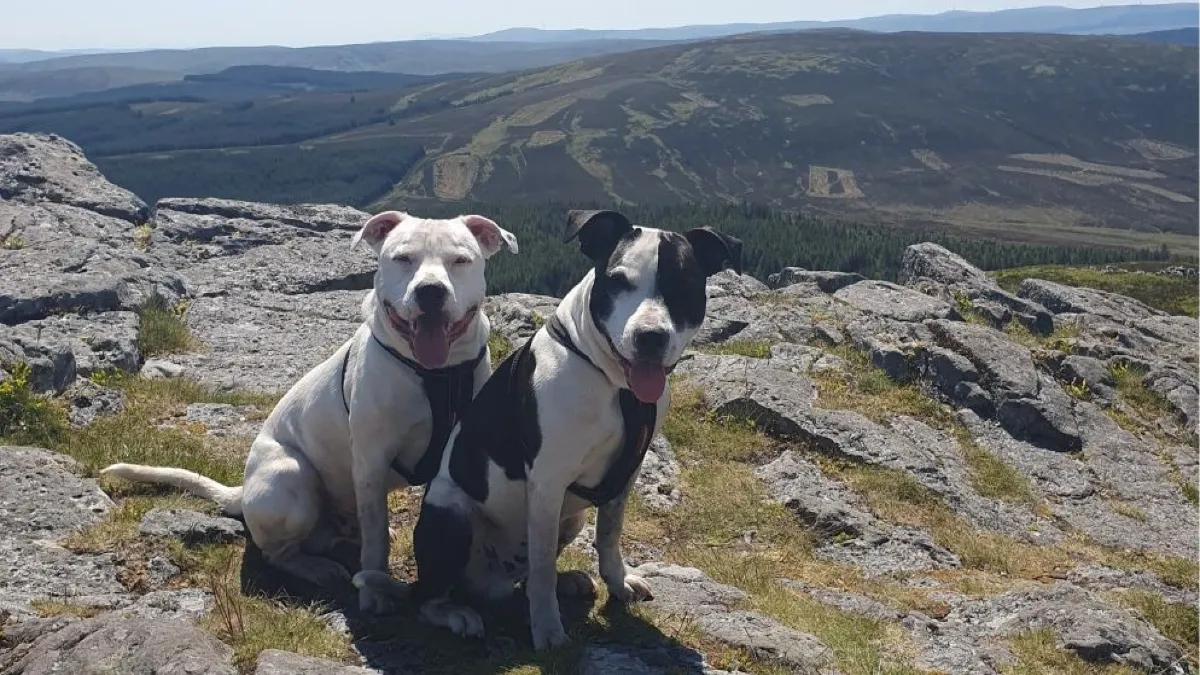
A complete, down-to-earth guide to Staffy temperament, personality, behaviour and quirks — from an owner with 2 from the same litter!
Staffies are one of the most misunderstood breeds in the UK. Ask a Staffy owner what they’re really like and you’ll hear the same things over and over:
- affectionate
- clownish
- clever (sometimes too clever)
- eager to please
- people-focused
- occasionally dramatic
- always full of heart
They’re brilliant family companions — but they’re not always easy.
If you’re thinking about getting a Staffy, or you already share your home with one, this guide covers the traits that matter most: temperament, behaviour tendencies, training style, social needs, exercise, and the small quirks that make them so loved.
1. Temperament: Affectionate, People-Focused, Emotional
A well-bred Staffy is a genuinely people-loving dog. They’re happiest when they’re close — often very close — to their humans. Staffy owners joke about their dogs being “velcro dogs,” but it’s not far from the truth.
What this means in real life:
- They bond deeply with their family.
- They thrive on human company.
- They can struggle with being left alone too long.
- They are sensitive to tone and emotion.
They’re also surprisingly gentle with people. The “nanny dog” nickname came from their calm, patient behaviour around children — though supervision is always required, as with any breed.
Staffies feel things fully. Joy, excitement, frustration, worry — they’re open books. This emotional honesty is part of their charm, but it’s also why consistent routines help them thrive.
2. Energy & Play Style: High Play Drive, Fast Excitability
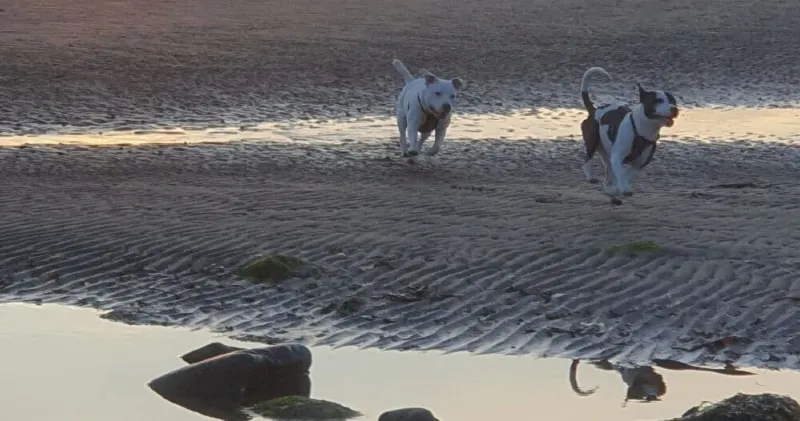
Staffies have a reputation for being little powerhouses, and it’s accurate. They love play — tug, fetch, wrestling, chase, anything interactive.
Their energy style typically looks like:
- Short bursts of high intensity (the famous zoomies)
- Sudden excitement spikes triggered by toys, people, or new environments
- A natural enthusiasm for rough-and-tumble play
- A switch-off point where they suddenly flop and recharge
They’re not endurance dogs, but their bursts can surprise you.
A daily combination of physical exercise and structured downtime works best.
3. Behaviour Tendencies: Friendly, Social, Sometimes Over-Keen
Most Staffies are social butterflies — sometimes a little too social. They greet people like long-lost friends and can overwhelm visitors with enthusiasm.
Common behavioural traits:
- Very friendly with people
- Often confident with strangers
- Highly expressive body language
- Can jump up when excited
- Noise levels vary — some are quiet, others ‘talk’
Challenges to be aware of:
- Overexcitement during greetings
- Mouthiness in pups (they explore with their mouths)
- Pulling on the lead when excited
- Difficulty calming down after stimulation
All of these are manageable with early training, calm routines, and consistency.
4. Intelligence: Quick Learners, Emotionally Smart, Easily Overstimulated
Staffies are clever dogs — not the type that needs endless puzzle toys, but the type that reads people well and learns routines quickly.
They respond best to:
- positive reinforcement
- short, structured sessions
- calm, predictable cues
- clear boundaries
Where some breeds thrive on intense training schedules, Staffies benefit more from balance — bursts of learning followed by quiet time.
A tired Staffy is not always a calm Staffy.
A regulated Staffy is.
5. The “Clown” Gene: Goofy, Dramatic, Endlessly Entertaining
Staffy owners know: the breed has a built-in sense of humour.
Common quirks include:
- rolling upside-down for attention
- groaning theatrically during cuddles
- dramatic sighs
- throwing toys at you to start play
- sprint-and-flop routines
- the “Staffy smile”
These traits make them brilliant companions — especially for people who enjoy a lively, affectionate dog with personality.
6. Social Needs: Thrive on Contact, Struggle With Long Isolation
Staffies are incredibly people-oriented. This is one of their strongest traits, but it also means:
- long days alone aren’t ideal
- they benefit from bonding activities
- they love routines
- they like to feel included
This isn’t a breed that’s happy being independent for hours on end.
Most do best with:
- structured alone-time training
- calm exits and returns
- enrichment during alone time
- predictable daily routines
7. Physical Build: Muscular, Compact, Strong — With Breed-Specific Needs
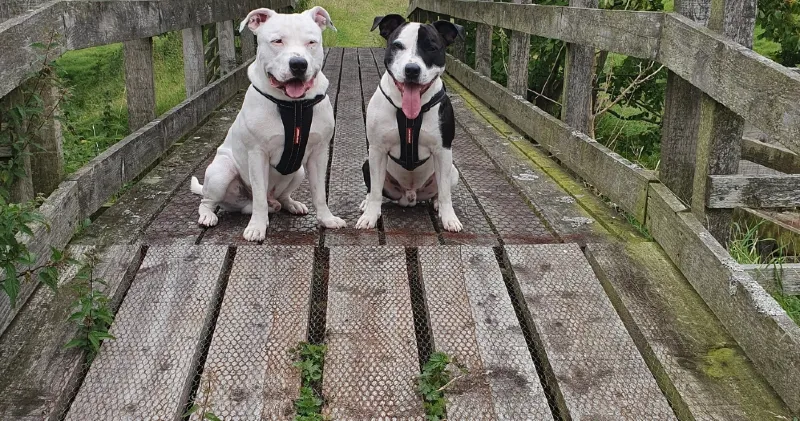
A Staffy’s body shape affects a lot of their care:
Short, smooth coat
Means they feel the cold easily — especially in winter.
Depending on how adventurous you are, winter hiking may benefit from additional protection, such as paw balms, dog boots, or a dog coat for winter.
Broad chest, short back
Makes them one of the harder breeds to fit coat sizing for — accuracy matters.
Powerful build
Means:
- highly durable toys are favoured over plush toys
- good harness fit is essential
- secure leashes matter
8. Training Style: Eager to Please, Reward-Driven
Training Staffies is enjoyable because they genuinely want to work with you.
They respond well to:
- calm environments
- the balanced type of dog training
- short training repetitions
- consistent routines
- high-value rewards
- clear expectations
They do not respond well to:
- shouting
- harsh corrections
- chaotic environments
- inconsistent rules
If you train calmly, they follow calmly.
If you train excitedly, they become rockets.
9. Are Staffies Good Family Dogs? Yes — With Structure
A well-trained Staffy is:
- affectionate
- tolerant
- playful
- loyal
- people-focused
They excel in family homes because they like to be included and involved.
But — they also need:
- guidance
- consistent rules
- socialisation
- routines
- calm handling
They’re not a “set it and forget it” breed.
They’re a hands-on, highly rewarding breed for owners who enjoy being involved.
10. Staffy Myths vs Reality
“They’re aggressive.”
No — they’re one of the most human-friendly breeds when well-socialised.
“They’re hard to train.”
They’re actually very trainable; they just get overstimulated.
“They’re high-maintenance.”
Emotionally yes, physically no. Care needs are simple.
“They all hate dogs.”
Not true. Many are sociable, many are neutral, some are selective — like any breed.
Not all are reactive — many are sociable with the right introductions.
Final Thoughts: What Staffies Are Really Like
If you want a dog that:
- loves being close
- makes you laugh daily
- enjoys training
- thrives on your attention
- gives their whole heart to their family
…a Staffy is hard to beat.
They’re not always calm, not always easy, and they certainly have their “full-on” moments — but with structure, affection, and consistent routines, they’re one of the most rewarding companion dogs you can live with.
And once you’ve had one, it’s rare you stop at one.
I love this guide, well written and so incredibly accurate. It was essentially a tick box against our Staffy, Eric.
Before meeting my now wife, unlike her who had a Staffy when growing up, I’d not had much interactions with Staffies, and did hold the often misconceptions towards the breed. But Eric has completely changed that view 100% and I highly doubt I’d ever consider another breed.
Since adopting Eric at almost 2 years old, he’s now a 10 year chap, who thinks he’s still a puppy. Loyal, loving, confident, silly, smiley, and a well known and liked dog around the neighbourhood.
He’s the perfect d̶o̶g̶ companion.
Thanks Matthew. That’s like myself. Wasn’t raised with dogs. Familiar with other people’s dogs, but they’re much different to live with. My partner was the one familiar with Staffies. We went from one, to three, now have two. Even the older lad never really really lost his playful nature. Can’t imagine life without them now. Definitely great companion dogs.